


 Back to All Blogs
Artificial Intelligence in Military Technology – Five Real-World Applications and Examples


Artificial intelligence is now part of everyday military routines. Drones that once just streamed video can now flag rocket launchers in under five seconds. Maintenance logs that sat untouched for months now trigger AI warnings weeks before an engine fails. Cyber-defense software written last year can isolate intrusions without asking a human for permission. These applications appear in the U.S. Department of Defense budget documents and NATO exercise summaries. The following sections outline five battle-tested ways AI is being used right now, along with the countries deploying them.
Why AI Is Becoming Important in Modern Defense and Security Systems
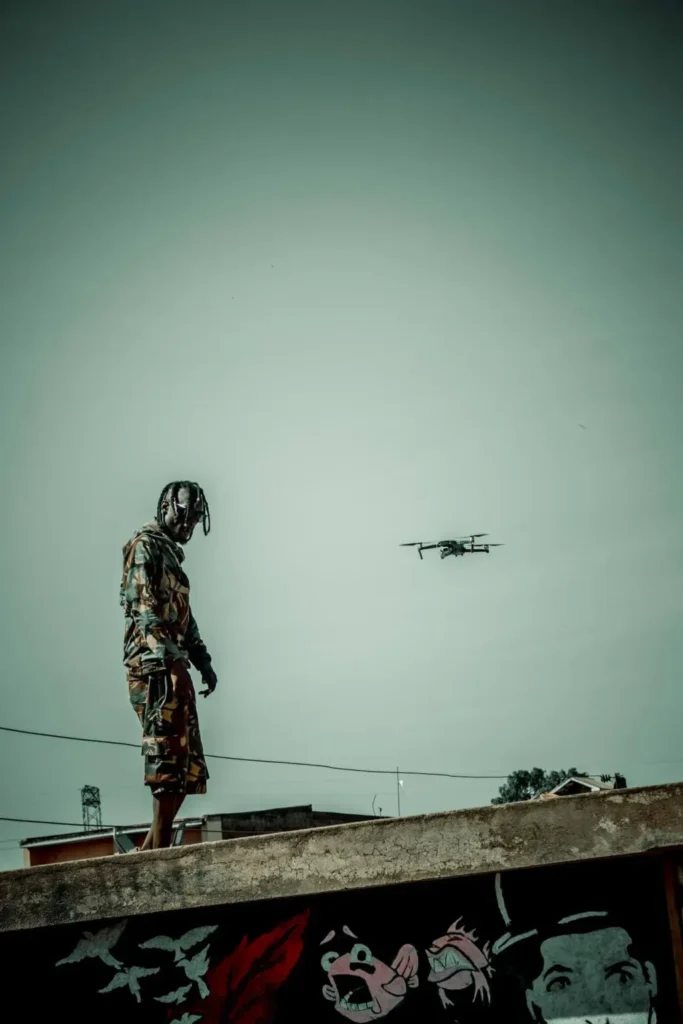
The Army’s FY-2025 research budget explains that today’s tactical networks must “process huge volumes of diverse, incomplete, and uncertain data in tactically-relevant timelines,” a workload that far exceeds human capacity. Machine-learning systems now scan that torrent in real time, giving commanders situational awareness at machine speed. The same Pentagon documents estimate predictive-maintenance AI will save about $5 billion annually by reducing unplanned vehicle downtime.
Key AI Applications in the Military
Security and Surveillance
Computer-vision systems now scan full-motion drone video, satellite frames, or checkpoint feeds for objects, faces, or behavioral anomalies. Tasks that once demanded large analyst crews can now be completed by a handful of operators supervising an AI stack.
Autonomous Vehicles
AI handles navigation, obstacle avoidance, and, when authorized by a human operator, weapon release without a constant radio link. By removing the need for a human pilot on every platform, one operator can supervise multiple air or ground vehicles while keeping crews out of high-threat zones.
Data Analysis and Cybersecurity
Machine-learning models sift through network logs, signals intelligence, or open-source feeds to detect malware, spot command-and-control traffic, or predict enemy moves. Algorithms can flag anomalies or route countermeasures in seconds, compressing workflows that once took human teams hours or days.
Combat Simulations and Training
Reinforcement-learning agents now act as the enemy in virtual battles, adapting to each trainee’s tactics. These synthetic training environments use AI-generated opposing forces that learn from previous iterations, producing reviews that indicate what went wrong as well as the statistical probability of casualties under similar conditions.
Weapon Systems
AI provides automatic target recognition, in-flight guidance updates, and can be cleared by human operators for collaborative swarm logic. The technology tightens the sensor-to-shooter loop while allowing the smallest effective munition to be chosen for each validated target.
Real-World Artificial Intelligence in Military Examples
The U.S. leads in disclosed programs. Project Maven is deployed in multiple combatant commands and has cut target recognition time from hours to single-digit minutes. DARPA’s Gremlins effort demonstrated mid-air retrieval of reusable drones during 2023 flight tests, proving that autonomous swarms can be launched and recovered without large, expensive airfields.
Singapore offers a useful non-NATO case. Police and civil-defense agencies have flown AI-equipped drones for border and event surveillance since 2018. During that year’s New Year security sweep, the drones helped officers catch 125 illegal entrants in one night, which the government credits to real-time computer-vision cues that would have been impossible for unaided crews to notice.
Israel’s “fire-factory” software is perhaps the most mature example of AI directly influencing military operations. By pairing every incoming rocket with an optimal interceptor, the system achieved a sub-30-second sensor-to-shooter loop in the 2021 Gaza conflict. Official briefings add that the algorithm selects the lowest-yield munition capable of defeating the threat, a constraint intended to reduce collateral damage.
China’s public record is harder to come by, but official press releases describe “intelligentized” border posts along the Himalayan frontier that use facial and licence-plate recognition. One 2022 report claimed a 98% automated match rate at selected checkpoints, although independent verification remains limited.
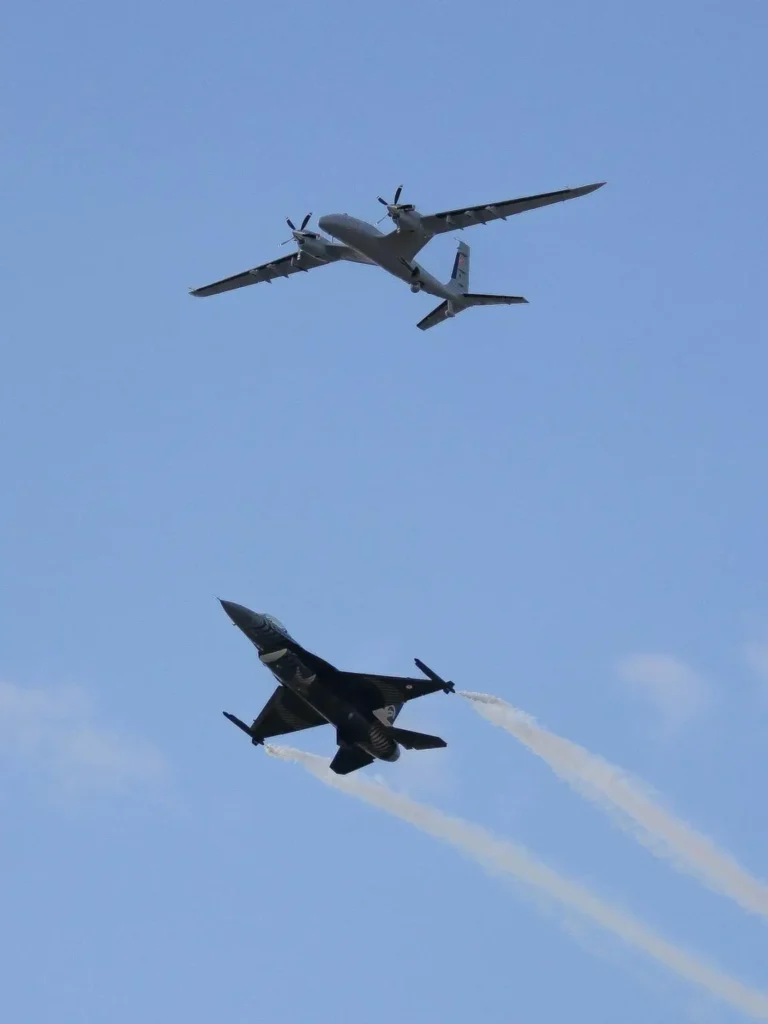
What Does This Mean for the Current State of Warfare?
Artificial intelligence is already embedded in modern military power. From saving billions in maintenance costs and spotting heat-signature rockets before they leave the launcher, AI is delivering measurable, documentable advantages on the ground and in data centers. The examples above, drawn from government statements and audited budgets, prove that the age of algorithmic warfare has arrived.
Ready to See How AI Can Protect the Future? Contact Us Today
If you want a better understanding of AI in military operations, visit our website and see how we can work towards a safer future.
FAQ
Is AI Surveillance Used Only in Military Zones?
No. Singapore deploys AI-equipped police drones for civilian New Year crowd control and uses facial recognition at civilian land checkpoints.
How Does AI Support Cybersecurity in Defense?
Machine-learning models continuously scan military networks for anomalies, isolate intrusions, and in some cases launch automated patches within seconds.
What Are the Ethical Concerns Around AI in Defense?
Key issues include accountability for autonomous weapon decisions, algorithmic bias in targeting, and the risk of escalation when speed-of-light software loops compress decision time for humans.
Can AI in Defense Work Without an Internet Connection?
Yes. Many deployed systems, such as U.S. Army UAVs and Israeli counter-rocket software, run inference on onboard or local servers. Internet connectivity is optional for model updates, not for operation.
 Raj Goodman Anand
Founder, AI-First Mindset

Recent Posts
-
 Published on: December 2, 2025
 -
Published on: November 25, 2025
-
 Published on: November 18, 2025